

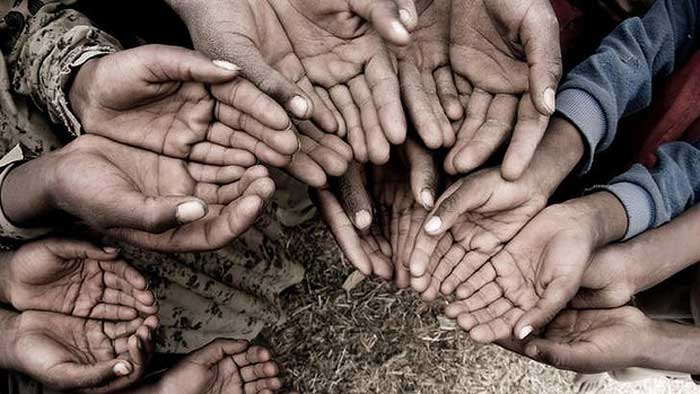
A report by US-based think tank Brookings has been released recently that highlights the extraordinary progress made in reducing extreme poverty around the world, while warning about the impediment sustaining this progress. The study asserts that India, with maximum no. of people, has escaped the cages of poverty as of July 2018.
Nigeria, taking over India in the index, reaches the summit with highest number of extreme poverty stricken population. The trajectories, at the end of May this year, suggest that India, however, has improved now with the numbers hitting just to 73 million people which still remains a major part of the total population of 132,000 Crores, whereas, Nigeria stands miserably high in the indicative index of poverty with 87 million people falling into the category.
To be noted, where on one hand, extreme poverty is growing by 6 people every minute in Nigeria, India continues with 44 Indians liberating out of poverty every minute, which remains highest in the world.
To analyze the truth of the report, THE CAPITAL POST, gets on fields for a reality check.
POVERTY IS REAL & EXISTS HERE..
Poverty is the state of one who lacks a usual or socially acceptable amount of money or material possessions. Poverty is said to exist when people lack the means to satisfy their basic needs. In this context, the identification of poor people first requires a determination of what constitutes basic needs. These may be defined as narrowly as “those necessary for survival” or as broadly as “those reflecting the prevailing standard of living in the community.” The first criterion would cover only those people near the borderline of starvation or death from exposure; the second would extend to people whose nutrition, housing, and clothing, though adequate to preserve life, do not measure up to those of the population as a whole.
Poverty has been associated, for example, with poor health, low levels of education or skills, an inability or an unwillingness to work, high rates of disruptive or disorderly behavior, and improvidence. While these attributes have often been found to exist with poverty, their inclusion in a definition of poverty would tend to obscure the relation between them and the inability to provide for one’s basic needs. Whatever definition one uses, poverty remains a serious challenge yet to be worked upon.
To know a little reality of the bizarre “poverty”, we decided to visit the most controversial slum area of Noida, The Nithari Village, Sector 31.
THE CAPITAL POST’S REPORT IN FULL
“According to me 44 is very less no. if we compare it to India’s population. I feel that there should not be any slum in Noida, it’s the mistake of the authorization and the slums should be removed as soon as possible. It’s been 40 years since Noida came into existence and Noida has always been a revolutionary city, wherever there are poor we put Cottage Industry, we are planning to ban plastic throughout the country so we can ask them to make paper bags, cups etc. Politicians and parties come and go but none worked in favor of poverty stricken people”–N.P. SINGH, President, Noida Resident Welfare Association (RWA)
“We get employment in here that is why we are forced to stay here, there are no opportunities in the village. We are kicked when we go to fill water from the government authorized taps. Medical facilities are extremely troubling us, we can’t afford private hospitals and if we go to government hospital they don’t even provide us with the proper medication. Even for using public toilets we have to pay Rs. 5 every time we visit the toilets, we can’t even afford that so defecation is really a big problem.”–A DISTRESSED SLUM RESIDENT
“I earn Rs. 1000-1200/day. I don’t sell the products more than Rs. 5 in my shop. Our condition is so poor but not a single politician ever visited us unless it’s for votes and election.”–A SHOPKEEPER IN THE SLUM
THE CAPITAL POST’S EXCLUSIVE SURVEY
“INCOME IN SLUMS”
INCOME IN RS./DAY PERCENTAGE
1000-1200 : 28%
700–1000 : 40%
500-700 : 30%
LESS THAN 500 : 02%
OCCUPATION
MALES
MASON : 25%
LABOUR : 56%
SHOPKEEPER : 05%
DRIVER : 14%
FEMALES
MAID : 20%
HOMEMAKER : 80%
SATISFACTION LEVEL
EDUCATION : SATISFIED 77% UNSATISFIED 33%
HEALTH : SATISFIED 55% UNSATISFIED 45%
HYGIENE : SATISFIED 32% UNSATISFIED 68%
DEFECATION : SATISFIED 05% UNSATISFIED 95%
WATER SUPPLY : SATISFIED 0% UNSATISFIED 100%
POWER SUPPLY : SATISFIED 57% UNSATISFIED 43%
SEEMS DIFFICULT?
Actually, the Sustainable Development Goals, sponsored by the UN, aims to end the extreme poverty globally by 2030.
ARE THEY HABITUAL OF BEING POOR?
While reporting live, what most baffled us was a feeling of the inhabitants of the slums to which they have become very much accustomed now. Getting known to a fact that every bread-owner there in the slum earns on an average of Rs. 500-1200 per day, which if not sufficient for a lavish life is still enough for a durable living, we were left wondering that what is stopping them to spend on their standard of living. Those muddy surroundings, geeky environment, pathetic hygienic conditions, suffocating skinny lanes and worst personal living, seemed to be their comfortable habitat. Thus, what message we got from them is after such long era of poverty they have totally adjusted themselves with the situation and now don’t really want to come over it! Living in Poverty has, therefore, become there comfort zone now!
THE POVERTY INDEX
Between January 1, 2016—when implementation of internationally agreed Sustainable Development Goals (SDGs) started—and July 2018, the world has seen about 83 million people escape extreme poverty. But if extreme poverty were to fall to zero by 2030, we should have already reduced the number by about 120 million, just assuming a linear trajectory. To get rid of this backlog of some 35 million people, we now have to rapidly step up the pace.
This notwithstanding, the fundamental dynamics of global extreme poverty reduction are clear. Given a starting point of about 725 million people in extreme poverty at the beginning of 2016, we needed to reduce poverty by 1.5 people every second to achieve the goal and yet we’ve been moving at a pace of only 1.1 people per second. Given that we’ve fallen behind so much, the new target rate has just increased to 1.6 people per second through 2030. At the same time, because so many countries are falling behind, the actual pace of poverty reduction is starting to slow down. Our projections show that by 2020, the pace could fall to 0.9 people per second, and to 0.5 people per second by 2022.
As we fall further behind the target pace, the task of ending extreme poverty by 2030 is becoming inexorably harder because we are running out of time. We should celebrate our achievements, but increasingly sound the alarm that not enough is being done.
LET US KNOW ABOUT OUR FAVOURITE
As, US continues to be the major bench mark for living standards and what not, let us know what poverty looks like in the first world.
You might think that the kind of extreme poverty that would concern a global organization like the United Nations has long vanished in US. Surely no one in the United States today is as poor as a poor person in Ethiopia or Nepal. Properly interpreted, the numbers suggested by the World Bank indicates that the United States has an immediate problem.
When we compare absolute poverty in the United States with absolute poverty in India, or other poor countries, we should be using $4 in the United States and $1.90 in India.
According to the World Bank 2013
People who lived on less than $1.90 a day
769 million (WORLD)
3.2 million–United States
3.3 million in other high-income countries (most in Italy, Japan and Spain)
People absolutely poor by global standards
5.3 million–America
3.2 million–Sierra Leone (West Africa)
2.5 million–Nepal
5.3 million–Senegal (West Africa)
7.4 million–Angola (Central Africa)
12.7 million– Pakistan
So, it is time to stop thinking that only non-Americans are truly poor.
CONCLUSION
Although poverty is a phenomenon as old as human history, its significance has changed over time. Under traditional (i.e., non-industrialized) modes of economic production, widespread poverty had been accepted as inevitable. The total output of goods and services, even if equally distributed, would still have been insufficient to give the entire population a comfortable standard of living by prevailing standards. With the economic productivity that resulted from industrialization, however, this ceased to be the case—especially in the world’s most industrialized and developed countries, where national outputs were sufficient to raise the entire population to a comfortable level if the necessary redistribution could be arranged without adversely affecting output.
After the live reports and survey, the exclusive coverage of THE CAPITAL POST suggested that where in one hand the goal seems harder to achieve, the reports released by the UN seems just to be confined to papers on the other. Therefore, it seems extremely difficult to meet the target and harder to eliminate global poverty by the end of 2030.
CONCERNS NOT NEW, YET UNRESOLVED
WATER: Water is definitely a major problem for the people in slum as they are kicked when they use the government authorized tap for water, still they fight for it and use the same water.
DEFECATION: JUNGLE They all are abused regularly for not being able to pay for using public toilets, because of which they are forced to defecate in open ground rather going for the construction of a washroom as Rs. 1000 per day can definitely afford that.
ASHA BAHUE: Asha Bahue are source of great help to the female resident of this slum they help a lot at the time of pregnancy.
ELECTRICITY: they are forced to steal electricity from public utility poles.