

CHANDIGARH: Nearly a year after Neeraj Chopra became India’s first ever track and field Olympic gold medalist, the darker side of Indian athletics has resurfaced as an Olympian discus thrower was provisionally suspended and a quarter-miler mysteriously vanished to elude dope tests.
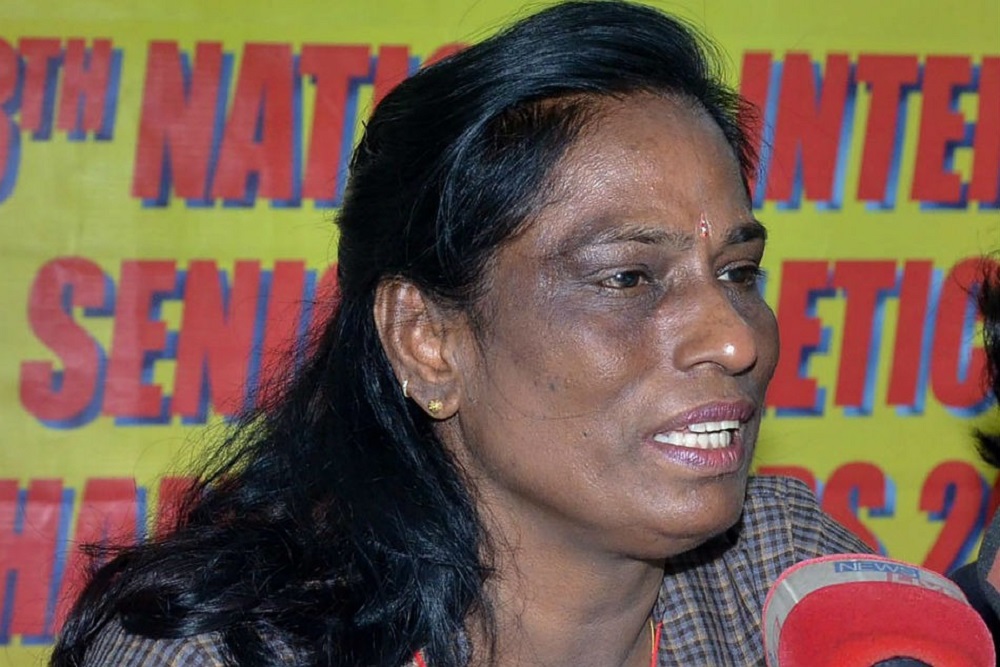
Before the Athletics Federation of India’s (AFI) two-day Annual General Meeting this weekend, famous sprinter PT Usha, who is also the chairperson of the junior selection committee, advocated for tough action against athletes who tarnish the hard work of many for their own short-term gain.
“I was also disappointed when they returned positive after such strong showings at the Olympics. They serve as role models. It does not appear to be a good time for Indian sports. “They fell for it even after several anti-doping awareness programmes are held from time to time,” Usha said on Friday.
“Players should be aware that taking such shortcuts will not go them very far. They can only leave a legacy if they work hard and perform well,” she urged.
After testing positive for a banned drug, Kamalpreet Kaur, who finished sixth in Tokyo, was provisionally suspended by the Athletics Integrity Unit, while Maharashtra quarter-miler Aishwarya Mishra has eluded NADA and AIU inspectors since winning a gold medal at the Federation Cup last month.
The AFI’s high command is likely to address the issue at the AGM, as well as introduce an online entry method to counter the threat of age fraud and impersonation in state level events. The governing body also plans to introduce the world’s first ‘plastic javelin,’ as well as explore innovative ways to promote javelin throwing among children and aspiring throwers.
“What’s important from a federation’s point of view is to spread the sport to every area of the country like they do in Germany,” Usha added, endorsing AFI’s choice to promote javelin.
“Yes, it was an issue initially,” the 57-year-old acknowledged when asked if more specialised coaches at the grassroots level would have helped. The federation has taken attempts to popularise the sport, which includes the introduction of a plastic javelin for children. When the youngsters achieve success at the state and national levels, they are assigned to specialist coaches.”
Usha also highlighted the areas where the governing body has to focus after several elite athletes were discovered with strange ailments in high-profile competitions despite the implementation of a centralised athlete monitoring system.
“That is an area in which there is room for improvement. Injuries are unavoidable in the life of any athlete, but it is the recovery process that must be expedited. Injuries disrupt training, thus precautions must be taken to avoid injuries in the first place,” she joked.
Other key agenda items that are likely to be discussed include bringing more transparency and professionalism beyond the national level, as well as considering proposed amendments to the AFI constitution and ratifying the executive committee’s decision to purchase a permanent home for AFI headquarters in September 2021.
The proposed amendments to the model constitution to be adopted by state units, as well as the draught of the model constitution to be adopted by district units, will be discussed during the two-day meeting.
During the event, the Indian contingent’s preparation for the World Athletics Championships in Oregon and the Commonwealth Games in Birmingham is expected to be discussed. With the Asian Games in Hangzhou being postponed by a year, the AFI meeting is expected to place a greater emphasis on the events scheduled for this year.
