

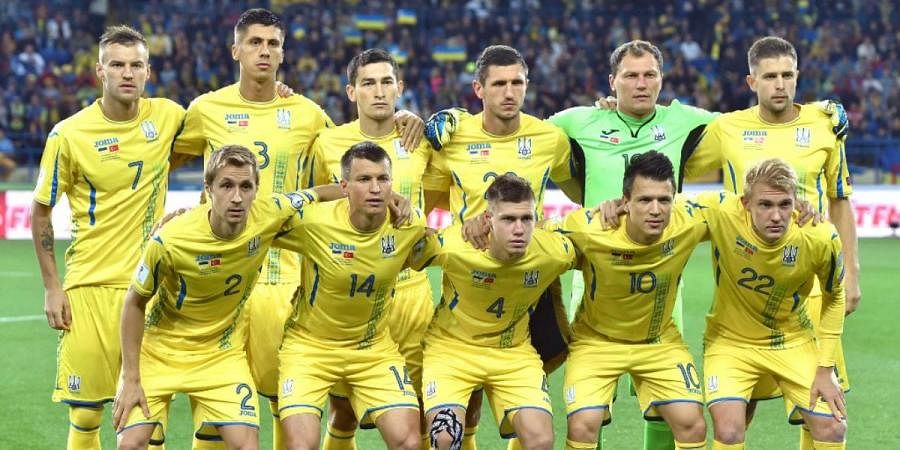
When Ukraine’s odd route through World Cup qualifying continues this week, it will be a challenge to the idea that sports and politics should be kept separate.
While Russia was kicked out of qualification due to its conflict in Ukraine, the Ukrainian national team was given an extra six months to prepare for the European playoffs.
Now, if Ukraine wins two games this week, a team comprised largely of players who have not played a competitive game in six months due to the domestic conflict will compete with others in November at the World Cup in Qatar.
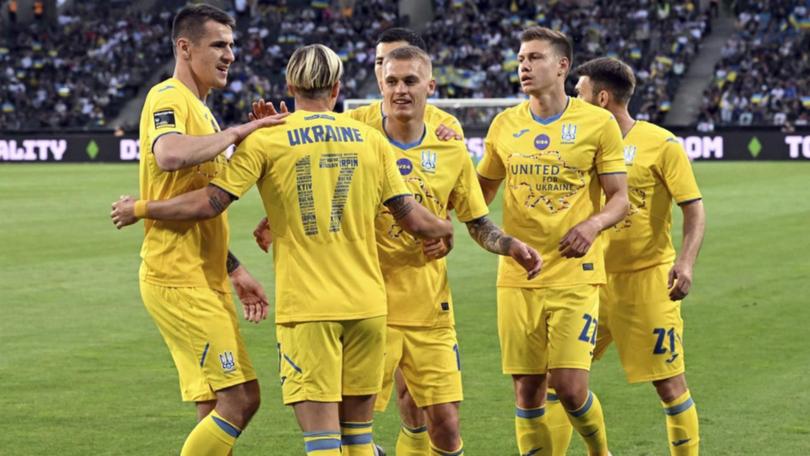
President Volodymyr Zelensky has given his approval for Ukraine’s players and coach Oleksandr Petrakov to leave the country for the game in Scotland on Wednesday, where they will showcase Ukraine’s yellow-and-blue colours and anthem in a dramatic demonstration of national identity in an international arena.
FIFA postponed the match in March because Ukraine was unable to field a team just one month after Russia began its military invasion.
The winners in Glasgow will face Wales in Cardiff on Sunday to determine which side will advance to the World Cup, where they will be placed in a group containing England, the United States, and Iran.
Taras Stepanenko, a midfielder, said last month that he plays with his heart and soul to please soldiers who wrote messages wanting the squad to qualify for the World Cup for the first time since 2006.
“Morale among the players is at an all-time high,” Petrakov commented on Monday. “It’s pointless to try to sway them or say anything. They’re seasoned footballers who know exactly what they’re doing.” FIFA praised Scotland and Wales authorities for a “strong sense of togetherness and collaboration” after they agreed to postpone the playoff to give their opponent a fair shot. All other European World Cup spots have already been determined.
Even though Graeme Souness captained Scotland at two World Cups and the Tartan Army had waited 24 years to qualify, taking on Ukraine in these circumstances has left one of Scotland’s greatest players conflicted.
I don’t only want Ukraine to qualify; I want them to go to Qatar and win it, Souness said in an interview with the British newspaper The Times on Monday. When I think about it, I believe that sending a message to Russia that its actions are unacceptable is much more important than football. FIFA already suspended the Russian teams from its games shortly after the war started, effectively excluding Russia from competing in the World Cup.
Russia was scheduled to play Poland in a European playoff in March, followed by either Sweden or the Czech Republic. All three nations declined to play Russia, which FIFA authorised and the Court of Arbitration for Sport upheld as a political boycott unparalleled in contemporary football.
When the battle broke out, Ukraine’s star Oleksandr Zinchenko expressed his deep rage toward Russia in a scathing social media post. “I pray you die the most agonising suffering death,” the Manchester City defender wrote with a portrait of Russian President Vladimir Putin. Zinchenko attached a Ukraine flag to the trophy on the field after helping Man City win the Premier League title on the last day of the season.
Zinchenko said of his native nation, “I want to die for these people, for all this support.” “I am very grateful for what people have given me and what they have done for me throughout this era, the most difficult period of my life, and I will never forget it.” This enthusiasm is spreading to Scotland, with players from Ukrainian clubs such as Shakhtar Donetsk and Dynamo Kyiv forming bonds during a month-long training camp in Slovenia.
Warm-up games against clubs from Germany, Italy, and Croatia were arranged by the camp’s host, UEFA president Aleksander Ceferin’s native soccer organisation.
Petrakov had joined them after being rejected down for a position in the Territorial Defense Forces. Ukraine’s football squad needed him more than ever to go to the World Cup.
