

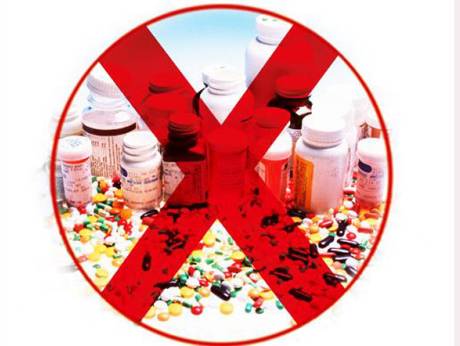
You thought that your pet medicines Saridon, Corex, Paracetamol were your life savior?
But you will be shocked to know that while curing they cased more and ‘CURE WAS NEVER THERE AGENDA’
Rishabh has always been a party animal, on Tuesday night he got an invitation from a friend and partied like never before. Next morning he woke up with the hangover. He was in immense pain so without thinking twice he asked his roommate to get him Saridon, thinking that it will give him relief. Later, when his day began, he noticed that his voice became husky due to excess consumption of alcohol. Next, he reached out for Corex syrup in a hope that it would give him a bit comfort.
It’s not only Rishabh, but this story can be related by many of us who consume medicines with their self-advice. They don’t even realize that whether it’s the exact medicine curing their illness. One can’t even imagine how menacing and hazardous these medicines are. These medications might cure the problem at that point but can generate hundred other problems in your body, that might not be deciphered at present but when they will it would be hard to get rid of it.
Recently the government has banned medicines which were the part of your daily routine. Nevertheless, the decision might have come late but it came as a blessing to all.
“There is no therapeutic justification for the ingredients contained in these FDCs. These may involve risk to humans. Hence in larger public interest, it is necessary to prohibit the manufacture, sale, and distribution of these FDCs.” – the Ministry of Health
Under Section 26-A of the Drugs and Cosmetic Act, 1940, a notification from the Ministry of Health names 328 FDCs as “harmful to human health” and notes the above-mentioned statement.
WHAT’S THIS MESS ALL ABOUT?
On 12th, September 2018, the manufacture, sale or distribution of 328 fixed-dose combinations (FDC) drugs has been banned by the Ministry of Health. A long legal battle between the ministry and the drug manufacturers has been brought to an end by this ban.
The government prohibited the use of FDC among humans with immediate effect, called for these ‘unsafe’ drugs to be banned, thereby settling the dust on the fate of “irrational” FDCs.
Nearly 6,000 drug brands are expected to be affected by this ban that includes popular brands such as Saridon (painkiller), Panderm (skin cream), Lupidiclox (antibiotic), Corex (cough syrup) and several others.
REASON BEHIND ACTION
The health ministry said that the ingredients in these banned medicines do not significantly add to the benefits that people can get from taking them. The decision immediately bans the manufacture, marketing, and sale of several common cough syrups, painkillers, and cold and flu drugs.
“Unnecessary, irrational and harmful” -Experts
“These are not part of any textbook of medicine or pharmacology. The situation existed because there are anomalies in the system of drug approvals in the country. This ban serves as a small correction.” -Anurag Bhargava, professor of medicine at Yenepoya Medical College, Mangaluru
POINT TO BE NOTED
FIXED DOSE COMBINATIONS?
FDC drug comprises of two or more active ingredients in a fixed dosage ratio. For instance, one of the FDCs in the banned list is “naproxen plus paracetamol”, that means it’s not the single drug but a combination of the two that have been discovered as avoidable for consumption.
WHAT ELSE IS PROHIBITED?
Prohibition has been imposed by the government on the use of six more FDCs amount to over Rs 740 crore annually, over their ingredients having no therapeutic value and posing a risk to consumers, those are not among the 328 banned ones.
DTAB INVOLVEMENT
The decision by the health ministry was taken after, the Drug Technical Advisory Board or DTAB, the country’s top drug advisory body, in a report mentioned that taking the 328 FDCs would be a health risk. India has some 2,000 FDCs as against a little over 500 in the US.
IMA’s STANCE
Dr. Agarwal said mixing two drugs create a new medicine. Further, he mentioned hat pharma companies should approach the Drugs Controller General of India and apply for a fresh license, conduct trials, prove safety and only then go to the market if it’s a new medicine.
“The Delhi High Court stayed this (FDCs ban) on technical grounds, but it is a good move for public health. Individual drugs are approved by the center, but some manufacturers make combinations of two drugs and get state licenses.” -Dr. KK Agarwal, former president of Indian Medical Association
IPA’s STANCE
Dilip Shah of industry body Indian Pharmaceutical Alliance told that most firms have already discontinued their FDCs or have little stock left with them. It will only take two days to disappear the banned FDCs from shops from the time the manufacturers tell their distributors and wholesalers to withdraw the medicines.
IDMA’s STANCE
Deepnath Roy Chowdhury, President of the Indian Drug Manufacturers’ Association, said the ban would have an impact on a market worth Rs. 16 billion a year for those drugs, which are produced by both small and large pharmaceutical companies.
GOVT WAS CHALLENGED BY-
- The government restricted sales of 344 FDCs, in March 2010, a move that was in court challenged by pharma firms.
- Several top pharmaceutical firms including Pfizer Ltd and Glenmark Pharmaceuticals Ltd, in 2016, went to the Delhi High Court to challenge the center’s move to ban a separate list of 344 FDCs, including brands like Corex cough syrup, Vicks Action 500 and D’Cold. The court later kept the government’s ban.
- Some health experts often prescribe FDCs as they are unable to spot the exact cause of an illness and bomb patients with combination doses, in the hope that at least one of the drugs would work.
VISITING ARCHIVES
A report submitted on 20th January 2015, the panel led by Chandrakant Kokate, vice-chancellor of KLE University, Karnataka, considered these FDCs irrational, mentioning they posed health risks and, pushing some of the firms and the pharma groups to challenge in the court the government’s declaration banning FDCs.
Delhi High Court struck down the ban, on December 1, 2016, stating that the government had acted in a “haphazard manner”. The matter then went to the Supreme Court
“In order that an analysis is made in greater depth, we, therefore, feel that these cases should go to the DTAB and/or a sub-committee formed by the DTAB for the purpose of having a relook into these cases.” -Supreme Court, stated in December last year
It was suggested by the Supreme Court that DTAB must decide whether the manufacture and sale of these drugs should be regulated, restricted or banned outright, and within six months its report should be submitted to the government.
To review the safety, efficacy and therapeutic justification of these drugs, an expert panel was then formed under the chairmanship of Nilima Kshirsagar, professor-head clinical pharmacology, G.S. Medical College and KEM Hospital, Mumbai.
The health ministry’s ban on FDCs included painkillers, anti-diabetic, respiratory and gastrointestinal medicines, covering 6,000 brands.
FORTUNATE TO BE STILL ALIVE
“Now, if a person needs only paracetamol for treating pain, they end up having the combination with ibuprofen, which is unnecessary. This can cause side effects (of ibuprofen) such as stomach bleeding in elderly patients.” -Anurag Bhargava, professor of medicine at Yenepoya Medical College, Mangaluru
Other instances include combinations that contain nimesulide (that has not been approved in several countries for use owing to its toxic effects on the liver), and combinations containing Serratiopeptidase (painkiller), that has been recalled due to its efficacy by the Japanese company Takeda.
MONEY IMPORTANT THAN LIVES
As per the estimates by All India Drug Action Network who is one of the petitioners behind the ban the market for unsafe, problematic FDCs in India makes up a quarter of the total pharma market in India assessed at Rs 1.3 trillion ($14 billion).
In a statement recently it noted that the FDCs under scrutiny account for approximately Rs 25 billion in sales and “represent only the tip of the iceberg.”
“The people of India have been made the consumers of unsafe medicines for too long and this is one step towards rectifying the grave situation of a pharma market brimming with innumerable irrational FDCs.” -the drug network
DEFENDING THEIR CRIME
The Indian Drug Manufacturers’ Association (IDMA), Indian drug makers body, has said that it “respects” the verdict as a responsible citizen of India, adding it has never prescribed “irrational” FDCs but believes in the “advantages of patient convenience and compliance” that these combination drugs provide.
SOME BANNED COMBOS
- Aceclofenac+Paracetamol+Rabeprazolev
- Nimesulide+Diclofenacv, Nimesulide+Cetirizine+Caffeine, Nimesulide+ Tizanidine
- Paracetamol+Cetirizine+Caffeine
- Diclofenac+Tramadol+Paracetamol (for acute musculoskeletal conditions) and others, including Diclofenac+ Paracetamol+Chlorzoxazone+Famotidine
- Nimesulide+Pitofenone+Fenpiverinium+benzylalcoho
- Heparin+Diclofenac (Heparin reduces the body’s ability to make clots)
- Nimesulide+Paracetamol suspension to treat fever and pain in children
- Aceclofenac+Zinc Carnosine to treat swelling, pain, joint stiffness
“As many as 46 percents of the banned FDCs were being used to treat respiratory infections, 11 percent for gastric conditions, six percent for dermatology infections, seven percent for general conditions and 10 percent as painkillers” – Dr. S Eswara Reddy, Drug Controller General of India
NEGLIGENCE OVERPOWERED NATION
Saridon is an analgesic combination of Propyphenazone/paracetamol/caffeine indicated for the management of a headache. There are side effects people should know before buting Saridon it includes; nausea, low fever, vomiting, stomach ache, loss of appetite, dark urine, tarry stool, yellowing of the skin or eyes.
Plus there are allergic reactions, chest pain, and difficulty in breathing, swelling of the throat, lips, tongue, and face.
Saridon is banned in:
- Sri Lanka
- Malaysia
- Thailand
- Turkey: Banned for production and sale in January 1986 because of severe adverse reactions.
- India
- Philippines
- Singapore
- Korea
Does it toss a question in your mind that what took India so long to take action? Was it not enough to know that if these countries have already banned this tablet then there might be some reason behind it?
PAYING TAX, GETTING DAMAGE
India is a nation where each and every citizen is a self-doctor, who gives a prescription through experience but without any degree. For an instance, if someone is having a headache then the relatives are eagerly waiting to suggest the meds and with confidence, they will suggest medicines like disprin, crocin, saridon etc.
The story doesn’t end here; it’s been India’s trend for ages to buy medicines from the chemist without any doctor’s prescription, in fact in India chemists are also considered as a doctor to whom people explain illness and purchase the medicines, careless to know what it really cures?
But not a single drop of realization has been evolved within the entire nation that how extremely dangerous it can result in. There are many who don’t even know that what hazard these FDC’s could create. At this point of time, one question is definitely popping in each of our mind that if the safety and capability of such combination drugs have not been proven, why are they still being manufactured and sold?
Anurag Bhargava, professor of medicine at Yenepoya Medical College, Mangaluru said that answer lies in the fact that “a combination drug allowed companies to evade the government’s price control mechanism”. Whereas Paracetamol might be under price control, when in combination with another drug, but that was not the case. FDC’s were brought in use to treat malaria, AIDS, and TB, but pharmaceutical companies continue to manufacture them for simple illness such as headaches, vomiting, and common infections.
It all happened due to the politics of money; can you imagine the body’s condition which is absorbing the medicine of AIDS just for a headache, can one imagine how strong the AIDS medicine would have been, or what side effects it would have been giving birth inside the body that is just suffering from normal cold and cough.
It’s good news that these unsafe medicines have been banned now, but the question that arises here is who is responsible for all the damages it had already created till now?
It would be shocking for you all to know that India spends only 1.25 percent of its GDP on health, while Afghanistan, on the verge of almost ruination, spends 8.2 percent on this item. This is also agreeable, but after this entire scenario India wants to become the superpower but are we as a nation forgetting one thing that to become a country it needs citizens in it. Who will commute in the bullet trains when you can’t even spend on health and instead of spending millions on it? It is something that needs to be pondering upon.