
Safar -E- Mehrauli…… Hold Yourself Back, As We Teleport You To The Second City of Delhi

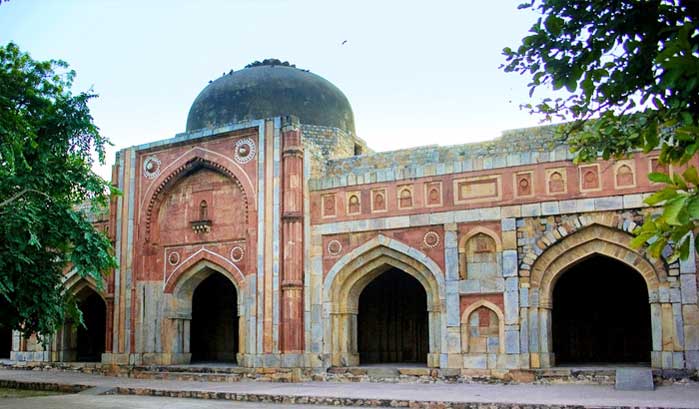
There are places which depict time, history, geography and culture. Mehrauli, the second city in terms of architecture of Delhi, narrates the similar story.
When you glare through the beauty of this place, your eyes will automatically stuck on the mesmerising elements like Qutub Minar, Yogmaya Temple, Centuries-old Iron pillar and dozens of extra heart throbbing structures.
It appears as if millions of stories are waiting to be known and the thousands of characters involved in it are trying to communicate with you.
Let’s dive into the History
This city was inhabited in 1191 by Muslim ruler, Mohammad Gauri who defeated Prithviraj Chauhan.
Although he could not rule for a long time; after his death in 1206, the city was captured by his slave General Kutubuddin Aibak and for nearly 600 years, there was a Muslim rule in the country. This phase was seen as an end to Hindu dynasty.
During this period, milions of such heritages were built that enhances the value of Mehrauli and are still present, out of which Qutub Minar has utmost value.
Glazing at Qutub Minar is somewhat like seeing your lover.
The people standing near the tower who click pictures of the magnificent creation and enjoy the view of it, somewhere wish to hold it between their arms.
Qutbuddin Aibak laid the foundation of Delhi’s first mosque, Qawwat-ul-Islam in place of a Hindu fort. Aibuk started the construction of Qutub Minar, which was continued by his successor Altamas. At present, it is the most prominent symbol of Delhi and is among the global heritage. There is also a legend in this regard that the Rajput King Prithviraj Chauhan made this minaret in the form of a celestial observatory. From its peak, his daughter used to see Yamuna River. In this area there is a reservoir which is known as the Shamshi Talab and Jahaz Mahal, it is said that it is made on a blurred trail of feet, which are the footprints of the Prophet’s feet.
Built in 1230 AD, the Jahaz Mahal is a beautiful monument. At present, the annual festival of flowers is celebrated here.
Take me back, one more time
That era, the governance, art of Vastu and architecture of that period are topics of deep interest within people and this interest becomes the reason that forces us to walk over the past, one more time.
The Pillar of Mystery
Mehrauli’s iron pillar is one such mystery that is beyond the understanding of the present day scientists. This iron pillar was built in memory of King Chandra. The average diameter of this 22 -foot-high pillar is 4:30 feet and when people embark it into their arms they somewhere have the thought of getting their desires fulfilled.
Present in the Qutub complex since ages, the pillar has gone through rain, heat and air. Still, this pillar has not been rusted till date.
God played his trick here
The Yogamaya Temple present in the Qutub campus, also known as “Jogmaya Temple”, is a Hindu temple dedicated to Goddess Yogamaya who is said to be a form of God’s trick, Maya.
It is believed that it is one of the temples that were built during the period of Mahabharat. While on the other hand, some people say that it is one of the 27 temples which Ghazni and later Mimalus had destroyed. This is the only living temple that has been used since the pre-Sultanate period. There is a water lake near this temple, which is called “Anangal”. After the death of King Anangpal, it was covered by trees from every side.
A walk in Archaeology Park
South Delhi is blessed with the highest number of monuments in the world, out of which many live without identity.
Here lies the deathstone of Balban. This grave was built in honour of the Ghias-Ud-Din Balban who ruled Delhi Sultanate from 1266 to 1287.The Jamali-Kadali Mosque is another such structure which has its own story. The name of this mosque has been named after Jalal Khan, a poet and saint in the period of Sikandar Lodhi and Humayun. It is a grave of Kamaali as well but his existence is less known. The Park has other attractive elements like Metkalfe Shamiyana, Gandhak ki Bawli, Metkalfe Boathouse, Kuli Khan ka Maqbara, Metkalfe Daak Bangle,etc.
Older than Old Delhi
Before the formation of New Delhi, Mehrauli was often called Old Delhi, after which Shahjahanabad took the name.
It is said that the successors of Altamash were weak and failed to control the affairs of the state.
So, Altamas decided to hand over the throne to Razia Sultan. A serious protest took the place against this by the court-benches and followers and she was killed in this rivalry and hatred.
Monuments of the Sultanate laid the foundations of Indo-Islamic architecture in India, which can still be seen in the heart of Delhi.